RFP Software Alternatives: A Switching Checklist
When contract renewal notices arrive from legacy proposal software vendors, bid teams face a familiar dilemma. License costs increase annually, yet proposal managers still spend hours manually shredding complex 200-page RFPs into spreadsheets, chasing subject matter experts for basic information, and correcting fabricated details generated by generic artificial intelligence engines. If your team is evaluating RFP software alternatives, you are likely looking to eliminate manual matrix creation, establish strict governance over commercial claims, and lower software overhead while maintaining technical accuracy.
RFP software alternatives are bid management platforms, compliance tools, and knowledge management systems designed to replace traditional legacy proposal tools. Modern alternatives prioritize deterministic requirement parsing, zero-hallucination grounded knowledge systems, browser-based privacy, and evidence matching over legacy answer libraries, helping organizations respond to complex tenders, RFPs, and RFIs with strict technical accuracy.
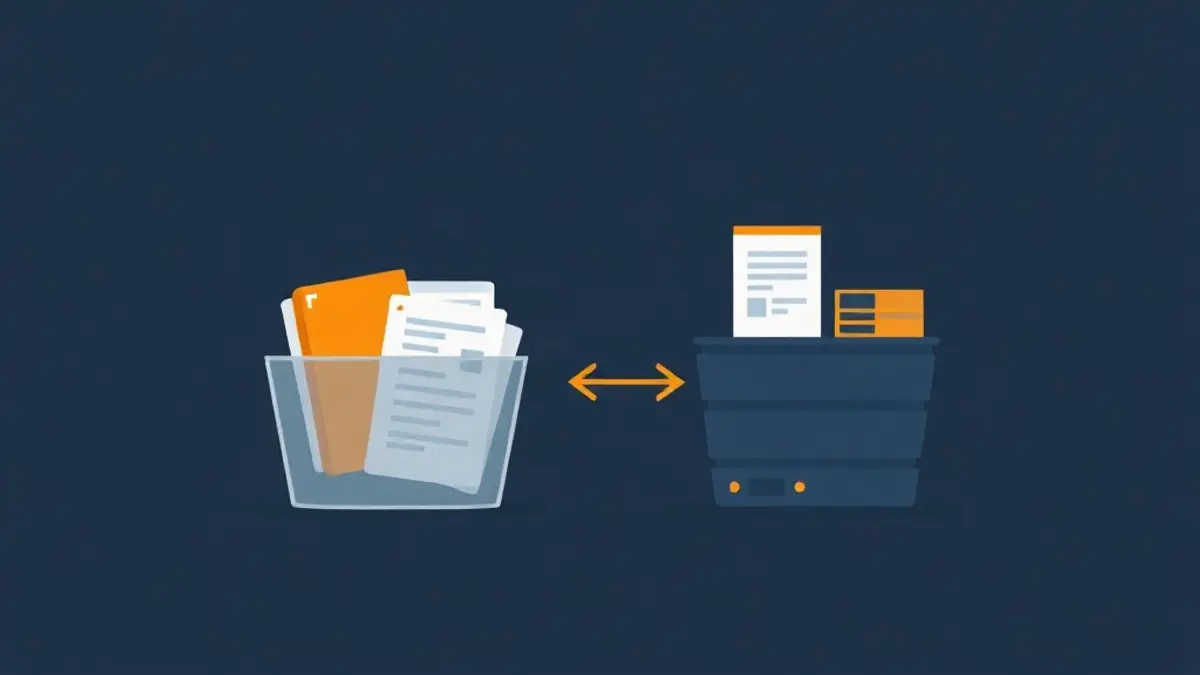
The Reality of Replacing Legacy Proposal Systems
Replacing established bid software is rarely a purely technical decision. It is an operational intervention that impacts pre-sales engineers, legal reviewers, commercial leads, and executive approvers. Traditional proposal platforms built over a decade ago relied heavily on flat question-and-answer databases. In practice, these databases degrade rapidly. As products evolve and compliance requirements shift, static Q&A pairs turn into outdated liabilities that require constant manual auditing.
When bid volumes increase, the maintenance burden of legacy software scales faster than response efficiency. Proposal teams find themselves managing the platform rather than focusing on strategic tender alignment. Modern platforms like TenderOS approach this problem from an architectural standpoint, shifting focus from rigid Q&A storage to dynamic document analysis and strict evidence retrieval.
Transitioning away from a legacy platform allows organizations to reassess how proposal content is governed, how requirements are parsed, and how subject matter experts contribute to responses. Evaluating the market requires looking past polished software demonstrations to examine core capabilities: document parsing precision, data processing privacy, citation integrity, and maintenance overhead.
Why Bid Teams Seek RFP Software Alternatives
The search for proposal software comparison options typically stems from specific operational bottlenecks. The most acute driver is the failure of legacy software to handle complex, unstructured tender documentation. Formal procurement documents—such as public sector tenders, defense procurements, and multi-region enterprise RFPs—do not consist of tidy, short questions. They contain nested requirement matrices, overlapping commercial terms, strict policy standards, and detailed evaluation frameworks buried within Hundreds of pages.
Organizations searching for Loopio alternatives, Responsive alternatives, or RFPIO alternatives frequently encounter five structural limitations in legacy platforms:
- Manual matrix construction: Bid leads must still copy and paste hundreds of line items from PDF and Word files into proposal management software or Excel spreadsheets to form a compliance matrix.
- Unbounded generative text: Generic artificial intelligence modules draft plausible-sounding paragraphs that invent client references, claim non-existent product capabilities, or misstate insurance limits.
- Per-seat licensing models: Cost models punish organizations for including occasional subject matter experts, reviewers, or executive sign-offs in the proposal workflow.
- Stale knowledge repositories: Document databases become filled with duplicate, outdated, and conflicting answers, forcing bid writers to verify every auto-generated suggestion manually.
- Complex implementation cycles: Onboarding takes months of manual mapping, taxonomy design, and custom integration before a single response can be completed.
For a deeper dive into evaluating platform architecture before making a platform transition, review our guide on modern proposal tool evaluation strategies.
Evaluating Alternative Software Architecture: Database vs. Document-Centric
To understand why alternative tools perform differently, bid managers must evaluate underlying software architecture. Legacy response software operates primarily as a structured relational database of questions and answers. When an RFP is uploaded, the platform uses basic keyword matching or semantic search to map incoming questions to stored answers.
This legacy approach fails when tenders present novel requirements, multi-part compliance conditions, or unique commercial terms. If an exact match does not exist in the database, the system either yields no result or pulls an outdated variant. The administrative effort required to maintain database hygiene scales exponentially as an organization grows. Organizations seeking alignment with knowledge standards like ISO 30401, useful when assessing knowledge system maturity, recognize that knowledge systems must retain clear context, origin, and verification bounds rather than serving as static text dumps.
Modern alternatives use document-centric, context-aware architectures. Instead of relying exclusively on static Q&A pairs, modern platforms break incoming tenders down into distinct requirements, conditions, and requested deliverables. They then compare these items against structured corporate assets—including audited case studies, certified policies, insurance schedules, and staff CVs—using precise retrieval algorithms.
The Fallacy of Generative Hallucination in Bid Responses
Generative artificial intelligence has introduced a new class of operational risk into bid management. Standard large language models are designed to generate fluent, contextually plausible text. However, in formal procurement, fluency without absolute factual accuracy leads to disqualification, legal exposure, or unenforceable contract terms.
When a tender asks for specific proof of compliance—such as a cyber security accreditation number, named reference accounts within a specific industry, or precise ISO certification audit dates—a generic AI engine will often invent details if exact information is missing from its training prompt. In a proposal context, an invented statistic or an unverified project reference can invalidate an entire submission.
TenderOS operates on a strict governing principle: evidence before eloquence. The platform is engineered so that it never invents a certification, client name, past project, headcount figure, insurance threshold, or technical capability. If operational evidence is absent from the company knowledge repository, the system does not attempt to compose a creative response. Instead, it places an explicit visual marker in the response workflow and alerts the user that specific documentation must be provided by a subject matter expert.
Technical Evaluation Criteria for Next-Phase Proposal Platforms
When conducting a bid management software comparison, procurement and proposal leads should evaluate candidates against a defined technical matrix. Relying solely on vendor feature lists often obscures critical gaps in document handling, data governance, and search accuracy.
The evaluation process must prioritize how software handles high-volume document ingestion, whether processing occurs securely, and how effectively the system isolates mandatory requirements from informational text.
| Evaluation Category | Legacy Platform Standard | Modern Alternative Standard | Hypothetical Evaluation Weight |
|---|---|---|---|
| Document Ingestion | Manual copy-paste or simple cell parsing | Native client-side parsing of DOCX, XLSX, and text-based PDFs | 25 |
| Requirement Extraction | Basic keyword searching | Deterministic separation of mandatory vs. non-mandatory clauses | 20 |
| Knowledge Grounding | Flat Q&A database entries | Source-attributed repository backed by primary documentation | 20 |
| Data Privacy | Cloud upload before document inspection | In-browser document analysis with zero server file persistence | 15 |
| Commercial Risk Detection | None or manual tagging | Automated identification of high-risk legal and commercial clauses | 10 |
| Export Integrity | Basic template export with formatting loss | Native DOCX, XLSX, and PDF exports matching original structures | 10 |
Note: The numerical weights in this table represent a hypothetical evaluation model for RFP platform selection.
The Compliance Matrix Workflow: From RFP Ingestion to Shredding
The most labor-intensive phase of any proposal lifecycle is tender shredding—the process of reading a multi-hundred-page procurement document and extracting every mandatory requirement, explicit question, implied obligation, and required attachment.
In legacy environments, proposal managers spend days manually building a compliance matrix in spreadsheets. If an addendum is released late in the bid cycle, updating that matrix requires reviewing the entire tender package again to identify changes.
A modern RFP response system automates this process immediately upon document upload. When a user opens a file in a modern platform, the system extracts critical structural elements automatically:
- Mandatory requirement statements containing binding language (e.g., “must”, “shall”, “is required to”).
- Non-mandatory or technical options (e.g., “should”, “may”, “where applicable”).
- Requested documentation, including required certificates, policies, financial statements, and resumes.
- Explicit submission deadlines, milestone schedules, and clarification windows.
- High-attention commercial clauses, such as unlimited liability, uncapped damages, or strict liquidated damages provisions.
By performing this extraction automatically, the proposal team can review a complete compliance matrix within minutes of receiving the tender documents. Teams wishing to test this workflow immediately can run their active tender documents through a free online tender analyzer to evaluate requirement extraction accuracy without creating an account or providing payment details.
Knowledge Governance and Evidence-Based Response Architectures
A primary reason proposal libraries decay over time is that traditional systems treat all content as equivalent Q&A pairs. A technical answer regarding cloud architecture is stored in the same format as a corporate policy document, an insurance certificate detail, or a marketing case study.
When switching to a next-generation proposal platform, organizations should adopt an evidence-based knowledge structure. Rather than storing thousands of standalone question-and-answer records, the central repository should store verified core assets, including:
- Corporate entity profiles, tax identifiers, and registration numbers.
- Audited financial statements, insurance certificates, and coverage limits.
- Certified quality, environmental, and security management policies.
- Verifiable client case studies with defined project scopes, timelines, and outcomes.
- Standardized staff resumes with verified credentials and project experience.
To establish sustainable governance around these materials, read our guide on structuring a proposal knowledge repository. When knowledge is stored as discrete, verified assets, proposal software can construct responses backed by primary evidence, eliminating stale content and reducing verification cycles for subject matter experts.
Step-by-Step Software Migration Framework
Executing an RFP software switching process without operational disruption requires a structured implementation methodology. Bid managers must maintain current tender response schedules while migrating knowledge assets, user permissions, and active proposals to the new environment.
Follow this sequential roadmap when executing a platform migration:
- Audit existing knowledge assets and purge obsolete content: Remove duplicate Q&A pairs, expired certificates, outdated product specifications, and past proposal drafts older than two years.
- Define data taxonomy and security attributes: Categorize assets by domain, security classification, geographic region, and product line to ensure appropriate role-based access controls.
- Execute a controlled pilot on an active tender: Process a real-world RFP through the new platform parallel to your current process to validate requirement extraction, response generation, and export capabilities.
- Establish grounded evidence rules: Upload primary source documentation—such as official security whitepapers, insurance policies, and product documentation—into the primary knowledge store.
- Configure user roles and sign-off workflows: Define access boundaries for proposal leads, technical authors, legal counsel, and executive approvers to maintain clear accountability.
- Export historical bids and decommission legacy tools: Archive past submission files in open formats (DOCX, PDF) and terminate legacy vendor contracts prior to automatic renewal windows.
Comparing Feature Sets Across Alternative Solutions
Selecting the optimal platform requires matching platform capabilities directly to organizational operating requirements. Not all bid teams require the same feature depth. A mid-market technology vendor responding to 30 RFPs per year operates under different constraints than a global defense contractor handling complex, multi-year government procurements.
The evaluation table below outlines core functional categories and maps how traditional tools compare to modern architectural standards across key execution phases.
| Functional Capability | Traditional Proposal Platforms | Modern Grounded Proposal OS | Operational Impact |
|---|---|---|---|
| Requirement Ingestion | Manual copy/paste into software forms | Client-side automatic extraction of requirements | Eliminates manual matrix assembly time |
| Knowledge Matching | Fuzzy keyword match against Q&A list | Vector-based evidence retrieval from verified assets | Improves response accuracy and context alignment |
| AI Content Drafting | Unbounded text generation | Grounded drafting with mandatory source citations | Prevents hallucinated claims and unverified metrics |
| Addendum Handling | Manual document re-reading | Automated document delta and change identification | Identifies modified tender terms immediately |
| Data Processing Location | Server-side cloud upload on file selection | Local browser processing for document analysis | Preserves strict data sovereignty and confidentiality |
| Licensing Structure | High per-seat costs with user caps | Workspace-based pricing with flexible user tiers | Enables broad involvement from subject matter experts |
Data Security, Privacy, and Local Processing Mechanics
In enterprise procurement, tender documents routinely contain sensitive commercial information, non-public technical specifications, and strict non-disclosure obligations. Traditional proposal software platforms require users to upload all procurement files to vendor cloud servers before document analysis or text extraction can occur.
This server-side processing model introduces potential data sovereignty issues, security risks, and compliance hurdles—particularly for organizations operating in government, financial services, healthcare, and defense sectors.
Modern platform architectures mitigate these security concerns by utilizing client-side, browser-based processing capabilities:
- Zero server upload for initial document analysis: Modern web technologies allow local browsers to parse, extract text, and analyze multi-megabyte DOCX, XLSX, and PDF files without transmitting source files to an external server.
- Data minimization and local memory bounds: Document content remains in local browser memory during preliminary requirement extraction, ensuring sensitive files never touch third-party storage buckets unnecessarily.
- Strict encryption standards: When data is synchronized to workspace repositories, it is protected using enterprise-grade encryption at rest (AES-256) and in transit (TLS 1.3).
- Role-based access security: Granular permissions restrict access to sensitive commercial proposals, financial details, and proprietary technical answers based on explicit user authorization levels.
For a comprehensive analysis of enterprise security protocols, data isolation boundaries, and compliance certifications, consult our guide on enterprise bid security and governance standards.
Change Management and Team Onboarding Strategies
The primary failure mode in proposal software adoption is team resistance. When software workflows are overly complex or force subject matter experts to navigate unfamiliar user interfaces, team members bypass the system entirely—reverting to email threads, local word processors, and unmanaged spreadsheets.
Successful platform implementation requires minimizing friction for casual users. Subject matter experts who contribute to proposals once or twice a month should not be required to undergo hours of formal system training.
To ensure rapid organizational adoption across all business units:
First, streamline the contribution workflow. When assigning proposal sections to subject matter experts, provide direct links to precise requirements alongside relevant source evidence extracted from the knowledge base. The expert should focus exclusively on reviewing and refining technical content, rather than searching through historical archives.
Second, establish clear content ownership boundaries. Assign designated knowledge managers to oversee specific domains—such as security certifications, corporate finance, or product architecture. These domain owners remain responsible for updating and verifying core evidence assets, ensuring that proposal writers always draw from audited, accurate information.
Third, maintain absolute output quality standards. Every generated response draft must include explicit source citations linking directly to verified company documents. If an answer cannot be backed by verified source documentation, the system must clearly signal that manual input is required.
TenderOS as an Alternative Architecture
TenderOS was built specifically to address the structural flaws inherent in traditional Q&A databases and unbounded generative AI tools. Rather than attempting to automate proposal writing through unconstrained text generation, TenderOS focuses on absolute structural accuracy, verified content grounding, and zero-hallucination drafting.
The platform provides a clear path for organizations transitioning off legacy proposal software through a tiered model that accommodates both immediate tender analysis needs and enterprise workspace management:
- Free Browser-Based Tender Analyzer: Available at /tools/tender-analyzer/, this utility operates completely inside your web browser. Users can paste RFP text or open DOCX, TXT, or text-based PDF files to instantly count requirement statements, separate mandatory obligations, isolate requested documents and certificates, extract operational dates, and flag high-risk commercial clauses. The source file is never uploaded to a server, ensuring complete data privacy.
- Starter Workspace ($299/month): Designed for growing proposal teams requiring formal compliance matrix generation, a centralized Company Brain knowledge repository, evidence matching capabilities, grounded drafting with source citations, and professional DOCX/XLSX/PDF export functionality.
- Business Workspace ($799/month): Built for multi-person bid teams managing continuous tender volumes, adding advanced clarification workflows, risk registers, addendum delta detection, and expanded collaboration tools.
- Pro Workspace ($1,499/month): Tailored for high-volume enterprise operations requiring comprehensive audit trails, API access, per-tender access control, configurable retention, and extensive knowledge repository capacity.
- Enterprise Plans: Custom annual contracts designed for large global organizations requiring specialized security compliance, custom integrations, and tailored deployment agreements.
Complete tier details, feature inclusions, and billing options are available transparently at /pricing/.
TenderOS maintains strict operational boundaries: the system does not predict win probability, does not guarantee regulatory compliance or contract award, does not provide legal counsel, and does not auto-submit proposals to buyer procurement portals. It provides bid teams with a disciplined, structured, and evidence-backed operating system for proposal execution.
Frequently asked questions
How long does it take to switch from a legacy proposal platform?
Migration timelines depend on the volume and cleanliness of your existing knowledge assets. Organizations with audited content can transition within a few days by configuring workspace rules and importing verified core documents. Teams requiring extensive content auditing typically complete migration within two to four weeks.
Can modern RFP software alternatives parse scanned PDFs and complex Excel sheets?
Modern platforms parse standard DOCX files, structured XLSX spreadsheets, and native text-based PDF documents directly. Scanned PDF files that consist purely of flattened image data require prior optical character recognition (OCR) processing before structural text extraction can be performed accurately.
What happens to existing proposal libraries during migration?
During migration, historical proposal libraries should be audited rather than imported wholesale. High-value materials—such as audited case studies, active certifications, standard resumes, and approved policy documents—are transferred into the new knowledge repository as core evidence assets, while obsolete Q&A pairs are archived.
How do modern tools handle addenda and mid-bid RFP updates?
Modern platforms compare updated tender documents against original requirements using document delta algorithms. The software identifies added requirements, deleted clauses, and modified text, highlighting these changes directly within your active compliance matrix so team members can adjust responses immediately.
Are cloud-based proposal platforms safe for sensitive commercial data?
Safety depends heavily on platform architecture and data processing design. Platforms that perform initial file parsing locally within your web browser ensure that sensitive documents are not needlessly transmitted or stored on external servers, maintaining strict data confidentiality and compliance with enterprise security standards.
How does grounded AI differ from standard generative AI in bid response writing?
Standard generative AI constructs text based on statistical probabilities, which can lead to hallucinated facts or unverified claims. Grounded AI constructs responses using exclusively verified source documentation provided in your knowledge repository, inserting explicit citations for every claim and flagging missing information when evidence is unavailable.
Practical Next Steps for Bid Managers
Evaluating RFP software alternatives should be driven by practical testing on active procurement documents, not vendor sales presentations. If your organization is burdened by high per-seat renewal costs, complex database maintenance, or risks associated with ungrounded generative AI, testing an alternative framework on a live tender is the fastest way to validate operational performance.
Run your current tender package through our free online tender analyzer to see the requirement and mandatory counts for yourself, along with three sample requirements taken from your own text. The full inventories sit behind the paid workspace. The tool processes files entirely within your web browser without uploading your documents or requiring account registration.
When your organization is ready to upgrade to a full proposal workspace, TenderOS offers clear tier pricing starting at $299/month for Starter, $799/month for Business, and $1,499/month for Pro, alongside annual Enterprise arrangements. Review full subscription details on our /pricing/ page to select the workspace model that aligns with your active tender volume and operational team structure.