Questions 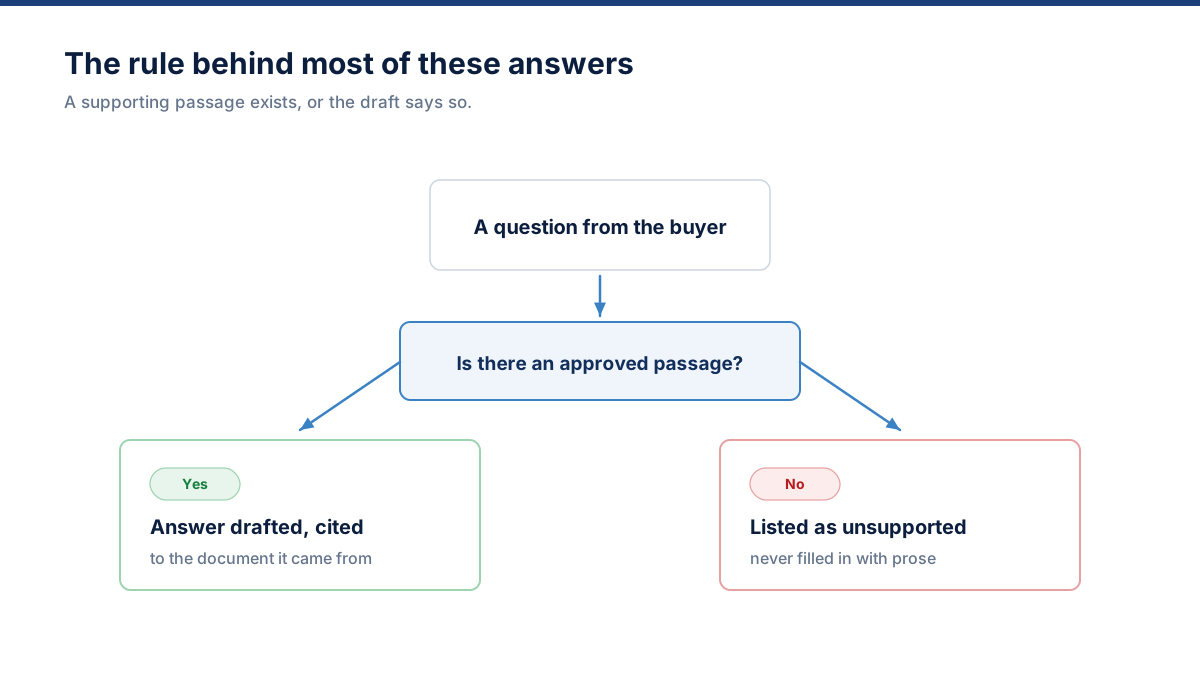
RFP Software FAQ: Everything People Ask
The RFP software FAQ: what the product does, what it refuses to do, how the free analyzer handles your documents — the answers below are written against ICO guidance on the UK GDPR — and what the paid plans actually include.
What TenderOS is and how it works
What is RFP response software?
RFP response software is a system that manages the whole work of answering a request for proposal, not just the writing. It reads the RFP documents, extracts every requirement into a trackable list, builds a compliance matrix, tracks deadlines and mandatory documents, assigns work to the right people, drafts answers from approved company knowledge, and validates the submission package before it goes out. A tool that only generates text is a writing assistant; RFP response software runs the bid.
What does the free tender analyzer actually do?
You paste your RFP text or open a DOCX, TXT or text-based PDF, and the analyzer scans it in your browser. It returns four numbers — pages, words, requirement statements and mandatory items — plus three example requirements taken from your own text, and it counts the requested documents, the dates and the flagged commercial clauses without listing them. It is a preview that proves the extraction is real; the itemised findings and the work itself live in a paid workspace. Every number comes from your actual document, never from a demo dataset.
Do my tender documents get uploaded to a server?
No. The free analyzer runs entirely inside your browser using local JavaScript. The file is read from your disk, parsed in memory and discarded when you close the tab. Nothing is uploaded, stored, logged or sent to any model provider, which matters because tender documents are usually covered by confidentiality obligations before you have even decided to bid.
How is TenderOS different from a generic AI writing tool?
A generic AI writing tool answers one question at a time and has no idea what your company can actually prove. TenderOS starts from the opposite end: it builds the complete requirement picture first, then matches each requirement against your approved evidence, and only then drafts. When the evidence does not exist, it asks you for it instead of inventing a certification, a client name or a headcount you never had.
Accuracy, grounding and what it will not claim
Will TenderOS invent facts about my company?
It is designed not to. Every factual company claim in a generated response must trace back to a document in your Company Brain or to something you typed in yourself. Where nothing supports a claim, the draft returns an explicit marker such as evidence missing or input required. Responses are labelled grounded, partially grounded or needs input so a reviewer can see at a glance what still has to be confirmed.
Can TenderOS predict whether we will win the bid?
No, and it will not pretend to. Nothing in the product outputs a win probability, because there is no validated statistical basis for one. What it does give you is Bid Fit — a reasoned assessment of whether you meet the eligibility rules, whether the required certifications and references exist in your evidence library, and whether the deadline is realistic — plus a Submission Readiness figure that is pure completeness arithmetic you can audit.
Files, pricing and who it is for
What file formats can TenderOS read?
The free browser analyzer handles pasted text, TXT, DOCX and text-based PDF. Scanned image-only PDFs need optical character recognition, which is part of the paid processing pipeline rather than the browser tool. Paid plans are designed to take a full tender pack — main RFP, terms, specifications, pricing templates, forms, annexes and addenda — and classify each document rather than treating them as one blob.
How much does TenderOS cost?
The tender analyzer is free with no credit card. Paid plans start at 299 dollars a month for Starter, 799 dollars a month for Business and 1,499 dollars a month for Pro, with Enterprise priced by annual contract. Plans are metered on tender workspaces, processed pages, users and Company Brain storage. There is no unlimited tier, because document processing and model inference carry a real per-page cost.
Which teams get the most out of it?
Organisations that respond to formal procurement repeatedly: IT and SaaS vendors, construction and engineering firms, consultancies, government contractors, healthcare and medical equipment suppliers, telecoms, facility management providers, logistics operators and manufacturers. The common pattern is a two-hundred-page document pack, dozens of mandatory requirements, several internal contributors and a fixed deadline.
Teams, workflow and submission
What happens to our knowledge as we run more bids?
It compounds. Every approved answer, verified claim, case study and certificate you confirm stays in the Company Brain and becomes reusable on the next tender. The second bid is faster than the first, and the tenth is considerably faster than the second, because the evidence, the wording and the structure already exist in a form the system can find.
Does TenderOS submit the bid to the procurement portal for us?
No. TenderOS takes you to a validated, complete submission package: approved responses, compliance matrix, requested forms, supporting evidence and a final checklist. Uploading that package to the buyer portal remains a deliberate human action. Automated submission into government and procurement portals is deliberately out of scope.
Is TenderOS a substitute for legal review?
No. TenderOS can flag contract clauses that usually deserve attention — unlimited liability, liquidated damages, unusual indemnities, IP ownership, payment terms, bonds, data residency, termination rights. Those are automated review flags to route to the right reviewer, not legal advice, and the master service agreement you sign remains your legal team’s decision.
What happens when the buyer issues an addendum?
You upload the addendum and TenderOS compares it against the tender already in the workspace: new clauses, removed clauses, changed deadlines, revised requirements and altered evaluation criteria. Critically, it tells you which of your already-drafted or already-approved responses are affected, so a late amendment does not quietly invalidate work your team signed off two weeks ago.
Can several people work on the same tender?
Yes, on team plans. Requirements can be assigned to owners — security questions to the security lead, commercial clauses to finance, contract terms to legal, architecture to the solution lead — with comments, review status, approvals and version history on every response. Role permissions run from owner and admin through bid manager, contributor, reviewer and viewer.
Where do I start if I have a live tender right now?
Open the free tender analyzer, paste the RFP text or load the document, and read the structure it returns: total requirements, mandatory count, requested documents, key dates and flagged clauses. That takes a couple of minutes and tells you whether the bid is worth pursuing at all. If it is, the paid workspace turns that same analysis into an assigned, trackable, exportable bid.
Question not answered here?