RFP Knowledge Base: Stop Rewriting the Same Answers
It is 8:00 PM on a Tuesday, and a proposal manager is digging through a shared folder named “Final_Proposals_2023_v4” to find an approved paragraph describing the company’s disaster recovery recovery-time objective. Two past submitted proposals contain conflicting metrics—one states a four-hour window, while another states two hours. Re-asking the lead systems engineer will take hours you do not have, but submitting an unverified specification creates legal and commercial exposure for the enterprise. This operational friction is the direct outcome of storing reusable proposal assets in static, unstructured documents rather than a centralized, single-source-of-truth system.
An RFP knowledge base is a centralized, indexed repository of pre-approved responses, case studies, team CVs, certifications, and technical specifications used to answer formal tender requirements. It allows proposal teams to search, verify, and pull authoritative company information into new bids, ensuring narrative consistency, compliance, and zero factual hallucination across all submissions.
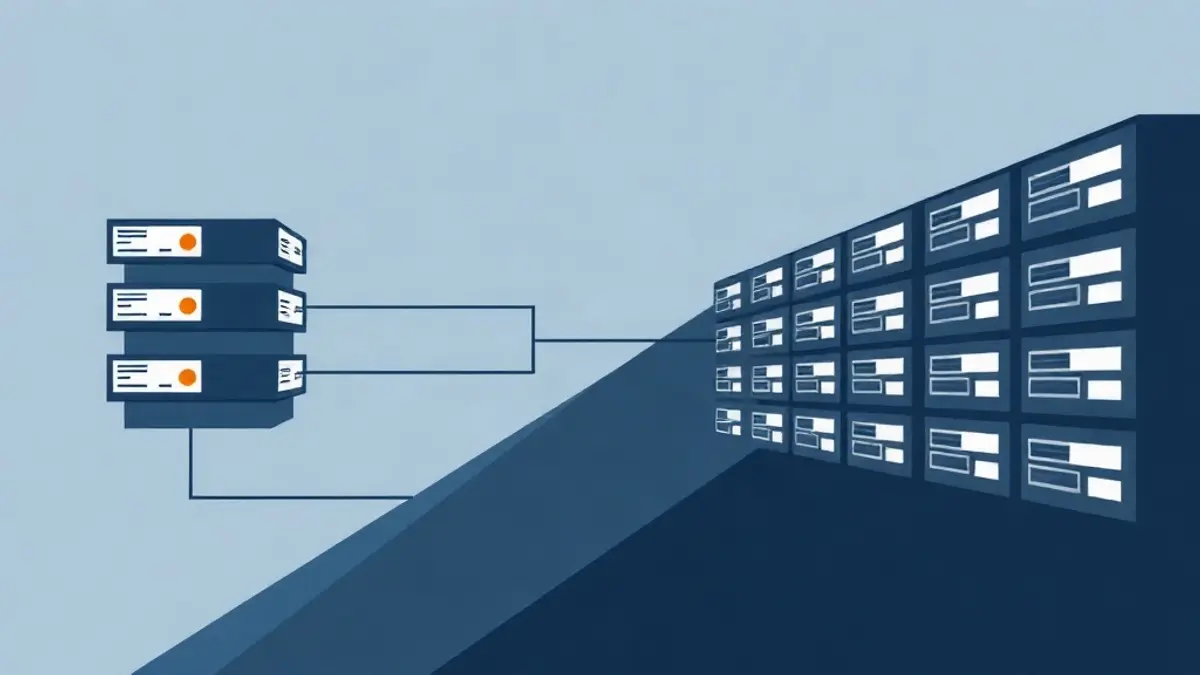
The Structural Anatomy of an RFP Knowledge Base
An enterprise RFP knowledge base is not simply a folder filled with past proposals. Past proposals contain client-specific assumptions, superseded pricing schemes, deprecated product names, and legacy technical architectures. Storing complete past documents without granular categorization leads to bad information propagation across bid cycles.
A modern proposal knowledge management software infrastructure relies on the concept of Atomic Knowledge Units (AKUs). An Atomic Knowledge Unit is a standalone, verified piece of company information designed to answer a single requirement or narrative topic. An AKU contains its own narrative text, associated metadata, compliance history, and assigned subject matter expert (SME).
By breaking complex bid narratives into discrete units, bid teams eliminate the need to hunt through seventy-page documents. Each entry in the RFP answer database exists as an independent entity that can be updated, audited, and embedded into new proposals without dragging along irrelevant context from previous buyers. The same units are what a buyer-specific company profile is assembled from, as covered in the guide to writing a capability statement for a tender.
The primary structural components of a robust knowledge base include:
- Core Question-Answer Pairs: Direct, authoritative responses to standard evaluation questions regarding corporate structure, financial stability, technical support, and methodology.
- Proof Points and Evidence Assets: Verified audit certificates, ISO accreditations, insurance policies, client testimonials, and performance metrics.
- Personnel Profiles: Current resume summaries, security clearance levels, professional certifications, and role descriptions for key personnel.
- Technical Specifications: Feature matrices, architecture diagrams, integration capabilities, and deployment prerequisites.
- Legal and Commercial Terms: Standard limitation of liability statements, warranty clauses, data processing addenda, and service level agreements.
Metadata Schemas and Classification Systems for Bid Assets
Searching a proposal knowledge base using basic keyword matching often yields hundreds of irrelevant results. Effective retrieval requires a strict metadata schema that categorizes content across multiple dimensions. When content is tagged accurately at the point of ingestion, proposal managers can filter thousands of entries down to the exact verified snippet required within seconds.
A complete taxonomy for a proposal content library includes both structural and business-specific tags. Metadata attributes must be enforced during the content creation and approval workflow.
- Content Category: Indicates whether the entry is a technical answer, a security policy, a corporate profile, or a executive summary.
- Target Industry or Vertical: Differentiates responses tailored for public sector healthcare, commercial banking, higher education, or federal defense.
- Product or Service Line: Associates the answer with specific software modules, hardware models, or consulting packages.
- Geographic Applicability: Identifies regional compliance variations, such as GDPR alignment for Europe, HIPAA for the United States, or local labor law compliance.
- Security Classification: Restricts visibility of sensitive content, ensuring unannounced capabilities or restricted financial data are accessible only to authorized bid leads.
- Verification Status and Expiration Date: Tracks when the response was last audited by an SME and sets an automated trigger for mandatory re-review.
- Owner/SME Assignment: Identifies the specific individual responsible for maintaining the accuracy of the record.
Establishing this classification model prevents the accumulation of duplicate records. When an SME updates a security standard, updating a single master record automatically refreshes the underlying capability profile across the entire enterprise response engine.
Chunking and Atomization: Breaking Documents into Answer Units
Ingesting past proposal documents into an RFP content library requires a systematic chunking protocol. Ingesting raw, fifty-page PDFs directly into a knowledge engine creates noisy search results. Large blocks of text contain mixed topics, making it difficult for proposal writers or automated tools to extract precise answers.
To create high-utility answer assets, bid teams must break long-form documents down into semantic chunks. A semantic chunk represents a single coherent concept. For example, a section covering data encryption, backup frequencies, and physical datacenter security should be split into three distinct entries within the company knowledge base for RFPs.
The first step in atomization is identifying narrative boundaries. Subheadings, bullet points, and numbered requirement responses serve as natural break points. Each extracted chunk must be stripped of buyer-specific references, such as the original purchasing agency’s name, project code names, or unique procurement schedules.
Once de-contextualized, the chunk is wrapped in standard narrative framing. The resulting entry should state the core capability clearly in the first sentence, follow with technical details or operational protocols, and conclude with verified evidence or certification references. This standard format ensures that pulled answers integrate smoothly into new proposal structures without requiring extensive editing.
Static Repositories Versus Searchable Answer Engines
Traditional file repositories like shared network drives, SharePoint document libraries, or cloud storage folders fail to meet the demands of modern proposal management. Static file stores rely on file naming conventions and hierarchical folder paths. When a file is stored deep within nested directories, its visibility approaches zero, forcing proposal writers to draft new answers from memory or duplicate existing research.
A searchable answer database transforms static assets into a dynamic content ecosystem. Instead of forcing users to browse through nested directories, an indexed database evaluates search queries against entry titles, full-text contents, attached tags, and contextual relevance.
| Operational Capability | Static Folder Repositories | Searchable Answer Engines |
|---|---|---|
| Search Functionality | Limited to file names and basic file-level text searches. | Full-text, metadata, and semantic contextual search. |
| Version Control | Manual file renaming (e.g., v1_final_revised.docx). | Database-level record versioning with explicit change logs. |
| Access Control | Folder-level permissions that obscure individual document contents. | Granular, entry-level role-based access control (RBAC). |
| Content Expiration | No automated tracking of outdated statements or expired certs. | Automated expiration dates and automated SME audit alerts. |
| Verification Transparency | Unknown review state; requires contacting original authors. | Explicit verification badges and assigned SME sign-offs. |
| Reuse Efficiency | High manual effort spent copying, pasting, and stripping old client data. | Direct insertion of clean, modular narrative blocks. |
Moving from a static folder hierarchy to a database-driven system drastically reduces the operational friction inherent in team-based bid responses. Proposal writers spend less time managing files and more time customizing strategic win themes.
Past project references are the hardest asset class to retrieve well, because relevance depends on sector, contract scale, and recency at the same time. Our guide to case study matching covers how that selection is structured so the strongest reference is chosen rather than the most recent one.
Governance Frameworks and Verification Workflows
Without strict governance, an RFP answer database degenerates into a repository of stale, inaccurate information. Maintaining content integrity requires establishing clear roles, automated review cycles, and explicit sign-off requirements. Enterprise organizations should align their knowledge management frameworks with recognized standards, such as ISO 30401 knowledge management systems, which define principles for effective knowledge capture, governance, and currency.
Every entry in the proposal knowledge base must have a primary owner. The owner is typically a Subject Matter Expert (SME) from engineering, legal, human resources, or product operations. While bid managers organize and clean the text, the SME remains legally and technically accountable for the facts within that entry.
Governance relies on time-based and event-based expiration triggers:
- Time-Based Expiry: Standard corporate information (financial summaries, employee counts) is set to expire annually. High-volatility content (product roadmaps, executive team lists) is set to expire quarterly. ISO certificates and insurance documentation expire on their official renewal dates.
- Event-Based Expiry: When a enterprise releases a major product update, undergoes a corporate restructuring, or changes its pricing model, an immediate audit flag is issued to update all related assets across the platform.
When an asset reaches its expiration date, the knowledge management software changes its status from “Approved” to “Needs Review.” Proposal managers are warned when pulling expired assets into active bids, ensuring unverified statements do not slip into final client deliverables. For a detailed breakdown of maintaining content hygiene, review our guide on establishing a structured proposal content governance framework.
Grounded AI Architectures and Retrieval Augmented Generation
The introduction of artificial intelligence to proposal management offers significant efficiency gains, but unstructured language models present serious compliance risks. General-purpose generative AI models are designed to predict probable sequences of words, not to adhere strictly to enterprise facts. When tasked with answering a technical requirement, an ungrounded model will fabricate plausible details, including non-existent software features, client references, or security standards.
In formal procurement, a single hallucinated capability can lead to disqualification, contract cancellation, or legal disputes. To leverage AI safely, organizations must use Retrieval-Augmented Generation (RAG) tied directly to a verified AI RFP knowledge base.
Under a grounded RAG architecture, the AI does not generate text from its general training data. Instead, when a user asks the system to respond to an RFP requirement, the engine performs a sequence of deterministic steps:
- Semantic Search: The engine searches the verified company knowledge base for RFPs to locate the most relevant, pre-approved Atomic Knowledge Units.
- Context Injection: The engine extracts the retrieved facts, certifications, and narrative blocks and provides them to the drafting engine as the sole permissible context.
- Constrained Generation: The AI drafts a tailored response using only the facts provided in the retrieved context.
- Citation Mapping: The engine embeds explicit references linking every claim back to the precise source record in the knowledge library.
TenderOS operates strictly on this principle: evidence before eloquence. If an RFP requires a specific SOC 2 Type II audit report, and that report is missing from the underlying Company Brain workspace, the engine will not invent a compliance statement. Instead, it inserts an explicit marker—such as [NEED: SOC 2 Type II Audit Report]—alerting the bid manager to collect the missing evidence from the legal or compliance team.
Conflict Resolution and Eliminating Redundant Proposal Data
Over multiple bid cycles, organizations naturally create overlapping narrative content. Different proposal leads draft slightly varied responses to identical questions, such as “Describe your customer support model.” One response might emphasize telephone availability, while another focuses on portal ticket management. Left unmanaged, these variations split the answer library into competing versions of truth.
Resolving content fragmentation requires a systematic deduplication process. Bid teams must regularly audit search queries and flag redundant entries for consolidation.
When consolidating conflicting records, apply the following resolution matrix:
- Identify the Source of Truth: Determine which document carries legal authority. For technical capabilities, the product documentation is authoritative. For SLAs, the signed legal terms prevail.
- Merge into a Canonical Entry: Combine the best elements of duplicate responses into a single master entry. Ensure the consolidated text answers the primary question while retaining necessary modular variations (e.g., standard support vs. premium support).
- Archive Legacy Records: Deprecate redundant records so they no longer appear in default search queries. Maintain an archive log to trace historical responses submitted to specific buyers.
- Redirect References: Point system search indexes toward the new canonical record.
By continuously pruning redundant entries, teams maintain a high-signal answer library. For guidance on structuring historical answers for maximum reuse, consult our analysis on maintaining a curated repository of RFP responses.
Requirement Mapping and Evidence-Based Verification
An answer in a proposal content library is only as valuable as the evidence supporting it. Evaluators in complex procurements penalize subjective claims. Statements such as “we provide industry-leading uptime” carry no weight without empirical verification.
To maximize scoring potential, knowledge base entries must pair narrative descriptions directly with verifiable proof points. This structure aligns with the rigorous requirements of public sector and enterprise compliance scoring.
When mapping content to requirements, ensure every core claim links to an underlying evidence asset:
- Claim: “Our application infrastructure is fully redundant and guarantees continuous service availability.”
- Evidence Asset: Annual third-party penetration test summary, multi-region architecture diagram, and explicit SLA uptime metric logs.
- Claim: “All customer data is encrypted using military-grade cryptographic standards.”
- Evidence Asset: FIPS 140-2 compliance certificate and current ISO/IEC 27001 certification statement.
- Claim: “Our account team possesses deep operational experience in healthcare management.”
- Evidence Asset: Project team resumes, PMP credentials, and anonymized case studies detailing past healthcare implementations.
Connecting narrative claims directly to evidence assets streamlines response generation. When drafting a proposal, the writer pulls not just text, but an entire verified compliance block complete with linked attachments. To explore how to tie requirements directly to verifiable proof assets, read our comprehensive overview of the systematic evidence matching process.
Information Security, Granular Permissions, and Local Data Protection
Proposal repositories house sensitive corporate intellectual property, including proprietary source code references, unreleased product roadmaps, pricing models, employee personal data, and confidential client lists. Securing this data requires robust information security controls.
Access to the proposal knowledge base must follow the Principle of Least Privilege (POLP). Role-Based Access Control (RBAC) should enforce distinct permissions across different user groups:
- Proposal Managers: Full access to search, pull, edit, and submit draft entries for review.
- Subject Matter Experts: Read access to relevant domain entries; write access limited to submitting content updates within their assigned domain.
- Executive Reviewers: Read-only access to final draft proposals and high-level compliance summaries.
- External Consultants: Scoped access restricted strictly to specific active bid workspaces, with no access to the core enterprise answer library.
Data protection also applies to how bid parsing and text analysis are performed. Uploading sensitive tender packages or proprietary internal documents to public AI models exposes the firm to data leaks, as public models may retain inputs for model training.
To address this risk, initial document analysis tools should process data locally. The free tender analyzer provided by TenderOS executes parsing algorithms directly within the client’s web browser. Tender documents, DOCX files, and PDFs are parsed locally without uploading raw files to external servers. This architecture allows bid managers to analyze requirements, count mandatory clauses, and flag commercial risks immediately without violating internal enterprise security policies.
Knowledge Management System Comparison for Proposal Teams
Selecting the right strategy for proposal content depends on team size, bid volume, and compliance requirements. Organizations generally transition through distinct stages of technical maturity as proposal volume increases.
The table below compares the functional characteristics of traditional document drives, generalized internal wikis, and specialized proposal knowledge engines.
| Capability / Metric | Traditional Cloud Folders | Enterprise Wiki / Intranet | Specialized Proposal Platform |
|---|---|---|---|
| Primary Data Structure | Unstructured file trees (DOCX, PDF) | Unstructured wiki pages | Structured Atomic Knowledge Units |
| Search Engine Type | Filename & basic string match | Full-text page indexing | Vector, keyword, & metadata search |
| SME Review Workflows | Manual email requests | Manual page tagging | Automated expiry & sign-off queues |
| Evidence Attachment | Disconnected file attachments | Embedded page images | Linked proof assets & compliance matrices |
| Requirement Parser | None (Manual reading) | None (Manual reading) | Local browser-based document parsing |
| AI Draft Grounding | None (Raw copy-paste) | Ungrounded general AI models | Grounded RAG with explicit source citations |
| Security Architecture | Directory-level permissions | Space-level permissions | Granular RBAC with local data processing |
Understanding evaluation frameworks is also critical when structuring bid team resources. Procurement teams score incoming proposals based on strict criteria. The following table illustrates a typical enterprise procurement scoring breakdown to highlight where knowledge base accuracy directly impacts bid outcomes.
| Evaluation Category | Typical Scoring Weight | Primary Knowledge Assets Required | Operational Risk Factor |
|---|---|---|---|
| Technical Solution & Architecture | 35% | Technical specs, integration guides, security diagrams | Outdated architectural details lead to non-compliance |
| Commercial Terms & Pricing | 25% | Approved rate cards, licensing models, SLA terms | Off-book pricing causes commercial liability |
| Demonstrated Experience & References | 20% | Verified case studies, client references, team CVs | Unverified references fail vendor background checks |
| Implementation & Support Approach | 20% | Implementation plans, SLA schedules, support flows | Unclear support metrics reduce technical score |
Note: The evaluation weightings shown in this table represent a hypothetical procurement schema used solely for illustrative purposes.
Implementation Framework: Eight Steps to Deploying an RFP Answer Database
Transitioning an enterprise from chaotic shared folders to an active proposal content library requires a structured implementation plan. Attempting to upload thousands of unverified legacy documents at once will overwhelm subject matter experts and corrupt the index.
Follow this sequential eight-step blueprint to build a clean, operational answer database:
- Conduct a Content Audit: Gather the last six to twelve month’s submitted proposals. Identify the twenty proposals with the highest evaluation scores or successful contract awards.
- Define the Metadata Schema: Establish mandatory tagging rules, including product categories, vertical markets, geographic regions, and SME owners, before ingesting content.
- Extract Atomic Knowledge Units: Deconstruct selected proposals into standalone Q&A blocks. Remove buyer-specific company names, pricing anomalies, and customized project terms.
- Assign Domain Ownership: Map each extracted entry to a specific SME or business lead. Require explicit sign-off from the assigned lead before setting the entry status to approved.
- Establish Evidence Links: Attach required certifications, ISO audit letters, insurance certificates, and architecture diagrams directly to relevant technical entries.
- Load Assets into the Workspace: Import approved, tagged entries into the company knowledge base for RFPs, establishing baseline access permissions across team roles.
- Run Trial Procurement Scenarios: Test the knowledge base against a past RFP. Evaluate search speed, narrative context match, accuracy of pulled statements, and ease of custom editing.
- Enforce Post-Bid Governance Routines: Integrate a knowledge extraction phase into every post-bid debrief. Draft, review, and ingest unique winning answers created during the bid back into the primary library.
Frequently asked questions
What is the difference between an RFP knowledge base and a standard corporate intranet?
A corporate intranet is designed for general internal information sharing, such as HR policies, company news, and internal directory information. An RFP knowledge base is specifically structured to handle external procurement compliance, featuring granular metadata tagging, automated SME review schedules, evidence attachment capabilities, and zero-hallucination AI drafting inputs.
How often should entries in a proposal knowledge management software platform be audited?
Core operational content, such as financial stats and executive team lists, should be audited quarterly. Technical specifications and software features should be reviewed with major product release cycles, while legal certifications and insurance documents should automatically trigger review requests thirty days prior to their official expiration dates.
Can an AI RFP knowledge base auto-generate answers without human review?
While advanced systems can draft contextual responses using pre-approved entries, human proposal leads must review all generated outputs before submission. The AI acts as an drafting accelerator using grounded knowledge retrieval, but human verification ensures the response aligns with unique client requirements and bid strategy.
How does an RFP content library handle confidential or client-specific data?
A proper content library strips all client-specific confidential information during the atomization and ingestion process. Entries in the master knowledge base contain only vendor capability facts, while unique client context is layered on separately within isolated, project-specific bid workspaces.
What file formats should a modern RFP answer database support?
The system must support content extraction and export across all standard procurement formats, including Microsoft Word (DOCX), Microsoft Excel (XLSX), Rich Text Format (RTF), and Portable Document Format (PDF). Excel support is especially critical, as many enterprise and government buyers issue compliance matrices in multi-tab spreadsheets.
How do you prevent subject matter experts from becoming overwhelmed by review requests?
Group review requests into scheduled quarterly audit batches rather than sending continuous ad-hoc emails. Modern systems present SMEs only with the precise text snippets requiring verification, allowing them to confirm, edit, or flag entries in a matter of minutes without reading full proposal documents.
Closing the Bid Loop: Ingesting Debrief Insights and Polished Answers
A common point of failure in proposal operations is the one-way knowledge flow. Content moves from the master knowledge base into live tender submissions, but the refined, highly polished answers created under the pressure of an active bid rarely make the return journey. Furthermore, critical intelligence gained from formal buyer debriefs often remains trapped in post-bid meeting notes rather than informing future proposals. Without a dedicated mechanism to capture these live iterations and evaluator reactions, an answer repository rapidly decays into a storehouse of outdated baselines.
To maintain an evolving asset, proposal teams should establish a structured post-submission harvest protocol focused on two primary operational triggers:
- Ingesting Bespoke Refinement: During active bid development, subject matter experts and executive reviewers frequently rewrite standard library answers to sharpen value propositions, clarify technical architectures, or eliminate unnecessary technical jargon. When an edited response represents a clearer or more persuasive explanation, the proposal manager should tag it for repository review. Content curators can then compare the submitted answer against the master record, updating the baseline entry or cataloging it as an approved variant for specific buyer contexts.
- Translating Evaluator Feedback into Content Directives: When buyers provide feedback during win/loss debriefs, organizations gain direct insight into how evaluators interpreted specific responses. If a buyer indicates that an executive summary lacked context or that a risk management narrative felt incomplete, that feedback should automatically trigger a knowledge base review task. The curator tags the corresponding entries with revision requests for the relevant subject matter experts. Note that formal debrief rules, evaluation disclosure requirements, and procurement feedback rights vary widely between public and private sectors, as well as by jurisdiction, and must be confirmed based on applicable tender guidelines.
Embedding this continuous feedback loop into the proposal lifecycle prevents version drift and guarantees that the repository grows stronger with every submission. This operational guidance serves as a general blueprint for maintaining accurate content, helping teams turn every completed bid into institutional knowledge.
Modernize Proposal Operations with TenderOS
Continuing to answer complex procurement documents using unorganized cloud folders or legacy word processing files wastes critical pre-sales resources and introduces compliance risks into your pipeline. Moving to an organized, grounded response methodology ensures every proposal your organization submits is accurate, fully compliant, and backed by verified proof assets.
Begin modernizing your proposal operations today by testing your active tender documents through our free tender analyzer. The tool processes documents instantly inside your browser without uploading files to external servers, providing an instant count of requirement statements, identifying mandatory clauses, extracting critical milestone dates, and flagging commercial risks.
To unlock full end-to-end response automation, scale up to a dedicated paid workspace. TenderOS offers transparent tier options designed for growing pre-sales teams:
- Starter Plan: $299 per month for small teams scaling up bid response volume.
- Business Plan: $799 per month for active pre-sales departments requiring advanced Company Brain features, grounded AI drafting, and compliance matrix generation.
- Pro Plan: $1,499 per month for high-volume enterprise operations requiring multi-workspace management, extensive audit controls, and deep evidence matching.
- Enterprise Plan: Annual contract custom configurations tailored for multi-division global enterprises.
Explore detailed feature breakdowns and select the right plan for your team by visiting the official [/pricing/] page, or start analyzing your procurement requirements immediately using our instant tender document parser.