AI RFP Software: What It Actually Automates
A 200-page Request for Proposal sitting open on a screen represents a complex operational challenge: tight submission deadlines, dozens of mandatory technical requirements, strict commercial terms, and distributed teams needing to contribute content. Bid managers, proposal leads, and pre-sales engineers spend hours manually transferring requirements into spreadsheets, chasing subject matter experts for verified content, and reformatting responses to match mandatory templates. Implementing AI RFP software transforms this manual bottleneck into an organized, evidence-based operating workflow.
AI RFP software is specialized software that automates response workflows for formal procurement documents like RFPs, RFIs, and tenders. Using generative AI and evidence-matching algorithms, an AI RFP tool parses requirements, tracks mandatory compliance conditions, searches verified company knowledge bases, drafts accurate response text with cited sources, and exports completed proposals in required formats.
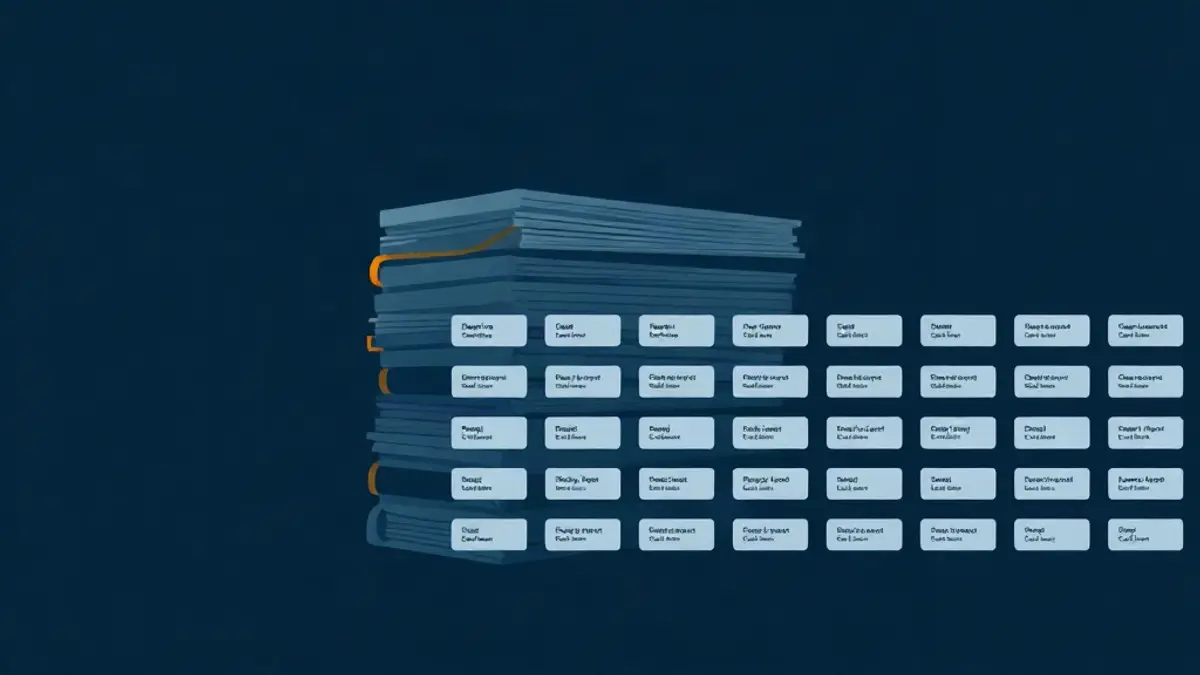
What modern AI RFP software actually does (and does not do)
Deploying generative AI for RFP responses requires a clear understanding of system capabilities and boundaries. At its core, an enterprise RFP AI platform operates as an orchestration layer between dense procurement documentation and verified organizational knowledge. Rather than treating a proposal as a creative writing exercise, specialized software treats procurement documentation as a set of structured data constraints that must be satisfied with concrete corporate evidence.
Modern software handles document parsing, sentence-level requirement extraction, policy matching, initial narrative drafting, and addendum change detection. It systematically reduces the repetitive administrative work that consumes proposal cycles: copying questions into tracking matrices, searching shared drives for past answers, formatting tables, and cross-referencing requested certificates against expiration dates.
However, bid teams must remain realistic about system boundaries. Software cannot invent strategy, replace executive review, or establish legal positions on contentious contract terms. Responsible tools do not predict win probabilities based on subjective guesswork, guarantee contract awards, or offer legal counsel. Furthermore, no enterprise software should automatically submit proposals directly to buyer portals without explicit human sign-off and verification.
Systems like TenderOS operate on a philosophy of evidence before eloquence. The platform assists teams by standardizing the proposal process, accelerating content retrieval, and verifying that every generated sentence traces back to approved company documentation.
Automated extraction of requirements and mandatory conditions
The initial stage of any formal bid preparation involves breaking down complex tender packages into actionable items. Traditional workflows rely on manual reading and highlighters to capture requirement statements scattered across volumes of instructions, scopes of work, and contract terms. AI powered RFP software automates this parsing phase through natural language processing models designed to identify contractual imperative verbs such as “shall,” “must,” “will,” and “is required to.”
By analyzing source text directly, the software separates hard mandatory requirements from optional or informational conditions. It isolates specific documentation requests—such as audited financial statements, health and safety policies, client references, and technical accreditations—and organizes them into actionable operational checklists.
To streamline this process during initial evaluation, teams can run source files through a client-side free tender analyzer to immediately count requirement statements, isolate mandatory clauses, and extract key commercial dates before setting up a full workspace. Because this parsing occurs directly in the user browser, sensitive bid documentation remains completely secure during the initial triage phase.
Automated extraction eliminates the risk of missing hidden requirements embedded deep within generic procurement instructions. Once extracted, these parameters form the baseline operational dataset for the entire proposal lifecycle.
Building an accurate tender compliance matrix
A proposal that fails to address a single mandatory requirement risks immediate disqualification during initial evaluation. Constructing a comprehensive compliance matrix is therefore the most critical technical task in proposal management. An automated RFP AI tool creates this matrix instantly upon reading the document structure, assigning unique identification tags to every clause and mapping them against corresponding response sections.
The generated compliance matrix categorizes entries by domain—such as functional requirements, technical architecture, security controls, commercial terms, and administrative submission conditions. This categorization enables bid leads to assign specific rows to appropriate subject matter experts across engineering, legal, human resources, and finance departments.
To understand the mechanics of transforming unstructured procurement documents into structured tracking databases, bid teams can review this guide on reading complex, multi-page RFPs in minutes, which details document structure parsing and requirement mapping.
The matrix serves as the single source of truth throughout the response build. As authors complete draft sections, the software tracks compliance status from unassigned to drafted, reviewed, and finalized, giving proposal managers real-time visibility into bid readiness.
Managing company knowledge without introducing hallucinated facts
Standard consumer generative AI models present a severe risk in formal procurement: hallucination. When asked a question outside their training data, standard language models invent plausible sounding details, fake project references, or non-existent accreditations. In a formal procurement process, submitting false technical specs or fake client case studies leads to immediate rejection, legal exposure, or contract termination for misrepresentation.
An enterprise RFP response software avoids this vulnerability through strict grounded architecture. The platform operates alongside a centralized Company Brain—a secured repository containing approved corporate documentation, case studies, employee CVs, security certifications, and audit reports.
When evaluating content engines, proposal leads should examine how grounded architectures function; detailed operational mechanics are covered in this guide on where standalone response generators break, illustrating why ungrounded models create compliance failures.
The platform relies strictly on uploaded, verified files. If a requirement asks for a specific certification or capability that does not exist within the uploaded knowledge base, the system strictly refuses to invent an answer. Instead, it places an explicit marker in the text, highlighting the missing corporate evidence for human intervention.
Grounded response drafting: connecting requirements to evidence
Grounded response drafting unites requirement extraction with verified company knowledge. When generating a draft answer for a specific RFP line item, an AI RFP assistant isolates the technical criteria, queries the verified company repository for relevant factual source blocks, and synthesizes a structured narrative response.
Every generated paragraph includes exact source citations pointing directly to the reference material in the company repository. For example, if a response details data encryption standards, the draft explicitly cites the relevant section of the company’s approved Information Security Policy document.
To inspect how sentence-level sourcing operates within formal bid workflows, explore this technical breakdown of grounded AI RFP responses with citations.
This citation-first methodology offers three distinct operational benefits:
- Evaluators receive precise, fact-backed answers that directly address the procurement criteria.
- Subject matter experts spend significantly less time reviewing drafts because they can instantly verify statements against cited corporate source files.
- Proposal teams maintain a complete audit trail proving the origin of every capability claim made in the submission document.
Buyers outside North America more often use the language of tenders than of requests for proposal, and the same platform is judged against the same criteria under either name. Our guide to AI tender software covers that vocabulary and the public-sector conventions attached to it.
Risk identification and commercial clause analysis
Evaluating technical fit is only half the battle; commercial and legal conditions dictate whether a contract is commercially viable. Procurement documents frequently contain restrictive commercial terms, onerous indemnity obligations, severe performance penalties, or unrealistic payment schedules.
AI for RFP responses scans contract conditions to flag high-attention commercial items. The software scans for problematic terms such as:
- Unlimited liability clauses and broad indemnification requests.
- Short payment windows or unfavorable retention terms.
- Rigid liquidated damages tied to aggressive delivery schedules.
- Transfer of background intellectual property or open-ended audit rights.
- Unilateral termination rights without appropriate compensation.
In public sector procurements, understanding regulatory rules is mandatory. For instance, procedures under FAR Part 15, which governs negotiated procurement in US federal contracting, set strict procedural standards for source selection, clarification discussions, and technical evaluations where non-compliant commercial exceptions can lead to immediate bid elimination.
While an AI RFP tool highlights these terms and organizes them into a structured risk register, it does not provide legal advice. Instead, it ensures that corporate legal and finance leads see risky clauses early in the review cycle, allowing the team to frame appropriate clarification questions or structure formal commercial qualifications before final submission.
Evaluation criteria mapping and score optimization
Procurement authorities evaluate proposals using structured scoring rubrics. Evaluators award points based on how thoroughly and clearly a response satisfies explicit criteria. An enterprise RFP AI platform maps draft responses directly against published scoring rubrics to help teams align their content with evaluator expectations.
The table below illustrates a hypothetical evaluation scoring structure and shows how an automated platform aligns draft content with evaluation requirements.
| Evaluation Category | Example Scoring Weight | Buyer Evaluation Focus | AI Processing & Evidence Strategy |
|---|---|---|---|
| Technical Capability | Primary Focus | Methodology, solution architecture, functional specifications | Extracts precise technical criteria; matches against technical whitepapers and architecture diagrams with source citations |
| Past Performance | Secondary Focus | Relevant experience, client case studies, verified outcomes | Pulls verified client case studies matching industry sector, contract size, and scope parameters |
| Implementation Plan | Balanced Weight | Resourcing, timeline feasibility, risk mitigation strategies | Maps project phases against past execution plans; highlights missing timeline parameters or missing key personnel CVs |
| Governance & Security | Critical Threshold | Compliance, ISO/SOC certifications, data protection policies | Cross-references security policies; flags expiring certificates and attaches approved policy annexes |
| Commercial & Pricing | Mandatory Pass/Fail | Cost structure, payment terms, financial stability assertions | Flags risky legal clauses; verifies required financial statements and commercial policy compliance |
Note: The evaluation weightings shown in the table above represent a hypothetical scoring model for illustrative purposes only.
By structuring responses around evaluation criteria, the system ensures that responses present information clearly for evaluators. Rather than hiding critical details in dense narrative blocks, draft text highlights key metrics, methodologies, and compliance points using clear headers and bulleted lists.
Managing addenda and document revision cycles
During an active tender process, buyers frequently issue addenda, question-and-answer logs, modified scope specifications, and updated commercial forms. In traditional workflows, managing these updates is tedious and prone to human error, as proposal leads must manually compare new documents against existing drafts to identify changes.
AI powered RFP software simplifies addendum management through automated document diffing and change detection. When a new addendum is uploaded, the platform compares it against previous revisions, isolating added, modified, or deleted clauses.
The system then updates the central compliance matrix automatically, flagging which specific draft responses require revision based on the buyer modifications. This real-time change tracking prevents teams from submitting responses based on outdated specifications, ensuring total alignment with the final tender parameters.
Team collaboration, review workflows, and approval gates
Completing a complex proposal requires structured collaboration across multiple business departments. An enterprise RFP AI platform acts as a centralized workspace, eliminating the operational chaos of sharing multiple DOCX files across email threads.
Collaborative workflows follow structured, sequential stages to maintain content control and accountability:
- Assignment and Scope Mapping: The bid manager assigns specific sections of the automated compliance matrix to relevant subject matter experts (SMEs) based on domain expertise.
- Grounded Draft Generation: The designated author uses the AI engine to generate an initial response grounded in verified company files, or writes a custom answer using suggested reference material.
- Peer and Technical Review: Designated technical leads review draft text alongside linked source citations, editing content and confirming factual accuracy.
- Commercial and Risk Sign-Off: Legal and financial leads review flagged commercial terms, risk registers, and commercial qualifications within the workspace.
- Final Executive Gate Approval: Executive sponsors review overall compliance coverage, incomplete requirement flags, and final content before locking the workspace for export.
This disciplined workflow ensures clear accountability at every stage, preventing unverified or unapproved statements from entering the final proposal document.
Output formatting and tender submission preparation
Even the best technical content fails if it violates submission formatting guidelines. Procurement instructions often dictate precise file structures, table layouts, page caps, font sizes, and document formats (DOCX, XLSX, or PDF).
Modern AI RFP response software separates content creation from final document layout. Teams compile and edit responses within a standardized, clear workspace. Once content is finalized and approved through designated review gates, the platform exports the completed proposal directly into required buyer formats.
| Workflow Parameter | Traditional Manual Response Workflow | Grounded AI Operating Workflow |
|---|---|---|
| Requirement Parsing | Manual reading, line-by-line highlighting, manual entry into Excel matrices | Automated requirement extraction, phrase categorization, and instant matrix population |
| Information Retrieval | Manual file search across shared drives, emails, and legacy bid folders | Vector search across verified Company Brain repository with precise source mapping |
| Content Drafting | Manual typing, copy-pasting from old proposals, manual re-editing | Grounded draft generation strictly backed by verified corporate source documents |
| Factual Integrity | High risk of outdated facts, expired certificates, or copy-paste errors | Zero invented facts; explicit missing-evidence flags when references are absent |
| Addendum Management | Manual sentence-by-sentence visual checks against past document versions | Automated document diffing, clause-level change detection, and matrix updates |
| Review & Approvals | Circulating multiple file versions via email threads and local drives | Centralized workspace with role-based assignment, citation checks, and approval gates |
The platform exports structured compliance matrices directly into XLSX spreadsheets, complete with requirement IDs, mandatory status, and corresponding section cross-references. For written narrative sections, exports produce clean, professionally structured DOCX or PDF files matching mandatory section numbering styles.
Evaluating an AI RFP platform: security, privacy, and architecture
When selecting software to handle sensitive procurement documents, security and data privacy are paramount considerations. RFIs and RFPs contain proprietary technical specifications, strategic pricing structures, and confidential corporate data. Systems must guarantee that sensitive material remains private and protected.
Key security criteria for evaluating an AI RFP platform include:
- Data Isolation and Model Training Safeguards: Strict guarantees that proprietary enterprise data, uploaded knowledge files, and generated proposal content are never used to train public language models.
- Client-Side Parsing Infrastructure: Capability to perform initial text parsing and content extraction locally within the user browser, preventing raw bid documents from moving across unauthorized external networks.
- Role-Based Access Controls (RBAC): Granular permission structures allowing workspace administrators to restrict access to sensitive financial or legal sections based on user role.
- Encryption Standards: Complete end-to-end data encryption for stored knowledge repositories (data at rest) and active workspace communication (data in transit).
- Audit Trail Capability: Full logging of system interactions, user edits, source document references, and content approvals for compliance auditing.
Software architecture should support business operations without introducing unnecessary data exposure. Utilizing client-side processing tools—such as a browser-based tender analyzer tool—allows organizations to evaluate bid documentation immediately without committing sensitive files to external cloud storage during early bid qualification.
Where the boundary of that automation actually sits — which stages genuinely run themselves and which need a human decision by design — is covered in the guide to realistic end-to-end RFP automation.
Testing AI RFP Software Before You Trust It
Vendor demonstrations are constructed to succeed. They use a clean tender, a well-populated evidence library, and questions the system is known to handle. None of that predicts behaviour on the case that matters: a requirement your organization cannot actually satisfy. The decisive property of AI RFP software is not the quality of the text it produces when evidence exists. It is what it does when evidence does not.
That property is testable during a trial, and the test takes under an hour. Each check below has a correct answer and a recognizable failure.
| Test | What a trustworthy system does | Red flag |
|---|---|---|
| Ask for a response to a requirement with nothing in the evidence library | Returns an explicit gap naming what is missing | Returns fluent, plausible prose asserting a capability |
| Follow a citation on a generated answer back to its source | Opens the specific document, page, and passage | Cites a document title with no locatable passage, or nothing at all |
| Load an expired certificate and request a response relying on it | Flags the expiry before drafting | Drafts as though the certificate were current |
| Upload an addendum that rewords an answered requirement | Marks affected responses as out of date against the previous wording | Accepts the new pack silently, leaving stale answers looking approved |
| Ask it to assess the probability of winning | Declines, and explains that it cannot be evidenced | Produces a confident figure |
| Have the drafting account approve its own response | Refuses, or requires a second identity | Permits self-approval |
The first row is the one to run first, because it separates two fundamentally different products sharing a category name. A system built to generate proposal text will always produce something, because producing something is what it optimizes for. A system built for regulated bidding treats an unanswerable requirement as an output in its own right — a named gap with an owner — because a blank that reads as an answer is more dangerous in a submission than an obvious hole.
The citation test is the second priority and is frequently failed in a subtle way. Many tools display a source name beside generated text without linking to the specific passage that supports the claim. A citation that cannot be opened is decoration. Under evaluation, a reviewer who cannot verify a claim in the time available will either strike it or take it on trust, and both outcomes are worse than a system that had refused to make the claim unsupported in the first place.
Run these tests on your own tender and your own documents rather than the vendor’s sample set. A platform whose behaviour degrades on real, messy evidence is telling you what it will do in the week before a deadline, which is precisely when nobody has time to check its work. If a trial cannot be run against your own material, that restriction is itself an answer.
Frequently asked questions
Can AI RFP software guarantee compliance or a winning proposal?
No software can guarantee compliance or promise a contract award. Compliance depends on your actual qualifications, pricing, capabilities, and strict adherence to buyer criteria. An AI platform automates data extraction, content matching, and document formatting, but human leads must review and verify all submission materials.
How does an AI RFP tool prevent factual hallucinations?
Enterprise platforms use grounded generation architectures. The AI draws content exclusively from an approved company knowledge repository containing verified policies, certifications, and project records. If required evidence is missing, the platform flags the gap rather than inventing facts.
Is my proprietary tender data used to train public AI models?
No. Enterprise proposal systems process data within isolated tenant environments. Your uploaded files, draft responses, and company knowledge repositories remain private and are never used to train public machine learning models.
How does the free tender analyzer process files without uploading them?
The browser-based analyzer uses local JavaScript processing to parse files directly within your web browser. Text extraction, sentence counts, mandatory clause identification, and date recognition run entirely on your local machine, ensuring no source files leave your device.
Does AI RFP response software work with complex spreadsheets and tables?
Yes. The platform parses tabular data, requirement matrices, and complex multi-column documents. It extracts line-item requirements from spreadsheets and exports completed responses back into structured XLSX or DOCX tables maintaining buyer-specified formats.
Can TenderOS submit proposal documents directly to procurement portals?
No. The platform does not perform automated portal submissions. It exports clean, fully formatted, audit-ready files (DOCX, XLSX, PDF) for proposal teams to inspect, approve, and upload manually to designated buyer portals.
Post-award transition: Turning AI-generated bid commitments into operational reality
A common pitfall when adopting AI RFP software is focusing entirely on pre-submission efficiency while overlooking post-award handoffs. Because AI models assemble responses by referencing past winning submissions and technical repositories, they can inadvertently surface custom service level agreements, legacy workflows, or bespoke commitments written for previous clients. If these draft answers pass through executive review without operational validation, your organization risks winning a contract based on terms that project delivery teams cannot fulfill under standard operational models.
To prevent this disconnect, bid management teams should establish clear protocols that link AI drafting directly to post-award service delivery.
First, configure approval workflows to distinguish between standard company facts and tailored operational promises. While baseline company descriptions and compliance certifications require minimal oversight, AI-drafted responses regarding customized support tiers, technical architectures, or implementation schedules should automatically route to functional delivery leads. Prompt templates should instruct the system to highlight any response where historical source data relied on a client-specific exception rather than standard service offerings.
Second, enforce strict metadata tagging within your central knowledge repository. Content managers must audit incoming knowledge assets to ensure bespoke concessions from past tenders are tagged as context-specific rather than standard baseline capability. This prevents the software from surfacing non-standard promises as automated default suggestions in future bids.
Finally, use the platform’s extraction tools to generate an operational obligations matrix immediately upon contract award. By running requirement extraction against the final submitted package, bid leaders can create a structured inventory of service level promises, reporting cadences, and technical deliverables for implementation managers. This ensures the precise commitments made during the AI-assisted drafting phase are transparently tracked and executed throughout the contract lifecycle.
Because the legal enforceability of tender submissions and technical appendices varies by buyer, solicitation type, and jurisdiction, organizations should always consult qualified legal counsel to review final commercial terms before contract execution.
Getting started with TenderOS
Streamlining your proposal workflow begins with establishing clear document parsing and grounded content generation. Rather than spending critical early bid days manually reading and copying requirements into spreadsheets, proposal teams can automate the administrative groundwork while maintaining complete control over final strategy and facts.
Start evaluating your current procurement pipeline today by running your live RFP or tender document through the free tender analyzer. The tool instantly extracts mandatory requirement counts, lists required attachments, flags key commercial dates, and identifies high-attention clauses—completely in your browser without uploading files or creating an account.
When your team is ready to scale bid operations with full compliance matrices, grounded draft generation, risk registers, and centralized team workspaces, explore our paid workspace tiers:
- Starter: $299/month for core proposal management and grounded drafting.
- Business: $799/month for expanding teams requiring advanced collaboration and evidence matching.
- Pro: $1,499/month for high-volume proposal desks needing dedicated support and workflow controls.
- Enterprise: Customized annual plans tailored to organizational compliance requirements.
Review complete workspace capabilities and feature specifications on our published [/pricing/] page to choose the right operational environment for your proposal desk.